Overview
The University Institute of Engineering and Technology (UIET), Guru Nanak University, is dedicated to shaping future-ready engineers through a holistic and industry-aligned education. The institute emphasizes strong academic foundations, innovation, ethics, and global competence, enabling students to become responsible professionals and leaders in technology and research.
Highlights
- Strong foundation in Science and Mathematics
- Industry-relevant curriculum aligned with current and future demands
- Hands-on learning through projects, labs, and experiential education
- Focus on innovation, entrepreneurship, and startup incubation
- Access to Research & Technology Development Centers and Centers of Excellence
- Advanced infrastructure with modern laboratories and smart classrooms
Vision:
- To empower the next generation of tech leaders and transforming lives through exceptional Computer Science and Engineering education, research, and innovation, producing socially responsible, and entrepreneurial leaders who transform the world through technology.
Mission:
- To support industry, government, society, and the scientific community by pursuing innovative research and new technologies in computer science, engineering, and other fields.
- To create Industry Institute Interaction in order to prepare students for work in an industrial environment.
- By establishing Centers of Excellence, can create a climate that encourages academics to work on and instruct students in progressive and convergent research issues.
ABOUT THE PROGRAM
Course Description
The Electronics and Communication Engineering (ECE) program focuses on the principles of electronics, communication systems, signal processing, and embedded technologies. It covers core areas such as analog and digital electronics, signals and systems, control systems, electromagnetic theory, analog and digital communication, VLSI design, microprocessors and microcontrollers, and computer networks. The program integrates strong theoretical foundations with extensive laboratory work, mini-projects, research exposure, and industry interaction, preparing students for careers in core engineering sectors, higher studies, and emerging technologies.
Program Duration
- B.Tech (ECE): 4 Years (Full-Time)
- M.Tech (ECE): 2 Years (Full-Time)
- Ph.D (ECE): Full-Time / Part-Time
Courses Offered
| S. No | Course | Specialization | Category | Course Duration | Course Type |
|---|---|---|---|---|---|
| 1 | B. Tech | Electronics and Communication Engineering | U.G Program | 4 | Full-Time |
| 2 | M. Tech | Electronics and Communication Engineering | P.G Program | 2 | Full-Time |
| 3 | PhD | Electronics and Communication Engineering | Full-Time/ Part-Time |
Eligibility
Admissions are as per University, AICTE, and Government norms.
Course Objectives
- Build strong foundations in science, mathematics, and engineering
- Develop critical thinking and problem-solving skills
- Promote ethical leadership and professional responsibility
- Enhance effective communication skills (LSRW)
Faculty Members
| Description | Photo |
| Dr. Harpreet Kaur is the Head of the ECE Department at the University Institute of Engineering and Technology and an Associate Professor of Electronics and Communication Engineering. She holds a Ph.D. from IIT Ropar and an M.Tech from C-DAC Mohali. She has more than 15+ years of teaching, research, industry and administrative experience out of which 7+ years' experience as Associate Professor of Electronics and communication Engineering. She has also published in several peer-reviewed journals. She has also written a few books and holds a few patents in her name. |  |
| Dr. Md. Rashid Mahmood obtained his Ph.D. and B.E. from Jamia Millia Islamia, New Delhi (A Central University), and his M.Tech. from Maharshi Dayanand University, Rohtak. He is currently employed as a professor in the department of electronics and communication engineering at the Guru Nanak University, Hyderabad. For over 20 years, Dr. Rashid Mahmood has been a distinguished educator at India's premier engineering colleges. With an active research profile, he has authored and co-authored over 70 research papers that have been successfully published in renowned national and international journals as well as symposium proceedings. Dr. Rashid Mahmood possesses a collection of 13 patents, published both nationally and internationally, with seven of them being honoured with grants. Currently, his account showcases an impressive repertoire of 30 SCOPUS publications. He serves as the editor for two internationally published books and authored one nationally published book. His areas of interest in research include image and video processing, wireless sensor networks (WSN), as well as the development of microwave filters and antennas. He serves as an editor and reviewer for numerous esteemed international peer-reviewed publications. |  |
| Dr. Komal Jaiswal have done her PhD from University of Allahabad . She have done her M.Tech in communication system engineering . She have expertise in Radio frequencies, microstrip patch antenna, microwave . |  |
| Ms. Manpreet kaur holds an M.E. in Embedded Systems, with teaching and research interests in Embedded Systems, IoT, and Computer Vision. She has been associated with the AICTE–IDEA Lab (Guru). She has contributed through patents, book chapters, and publications in reputed journals and conferences. She actively mentors student projects and promotes innovation in the field of ECE. |  |
| Ms. Srilatha Mangalaram Dedicated and goal-driven professional educator with a solid commitment to the academic growth and development of every student in the class. Efficiently guided UG students through their project work. Motivated students to come up with innovative ideas for project work as part of self-study for Analog and Digital Electronics. Committed to professional ethics and standards of practice. Skilled in adapting to students diverse learning styles./td> |  |
| Mr. Rajesh Saggurthi is an accomplished individual with a strong background in education and technology. He holds a Master of Technology (M.Tech) in VLSI System Design from SSJ Engineering College, which he completed in 2013, and a Bachelor of Technology (B.Tech) in ECE from The Vazir Sultan College of Engineering. Rajesh has extensive experience as an Assistant Professor in the ECE department, having taught at institutions like St. Martin's Engineering College, AAR Mahaveer Engineering College, and Anasuya Devi Institute of Technology In addition to his teaching career, he worked as an SRD Trainee at the Quality Evaluation Laboratory, Spices Board, Guntur from 2019 to 2021. He has published papers on topics such as spatial data management and the implementation of machine learning methods. Rajesh has also completed a course on IoT & Cloud Computing and cleared the NET Exam in December 2024. His skills include providing real-time knowledge of technology and a strong command of both theoretical and practical subjects. | 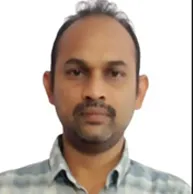 |
| Mr. R. Sunkari Rajasheker is an Assistant Professor in the Department of Electronics and Communication Engineering with over 17 years of academic experience. He holds an M.Tech in VLSI System Design from Kshatriya College of Engineering and a B.Tech in Electronics and Communication Engineering from Scient Institute of Technology. His teaching and research interests include VLSI Design, Digital Circuits, and Signals & Systems. He has successfully completed four NPTEL–SWAYAM courses during the July 2024 semester and was awarded the prestigious NPTEL Believer Certificate for his commitment to continuous professional development. | 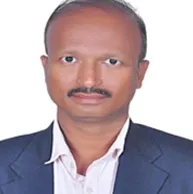 |
Departmental Facilities
Classrooms
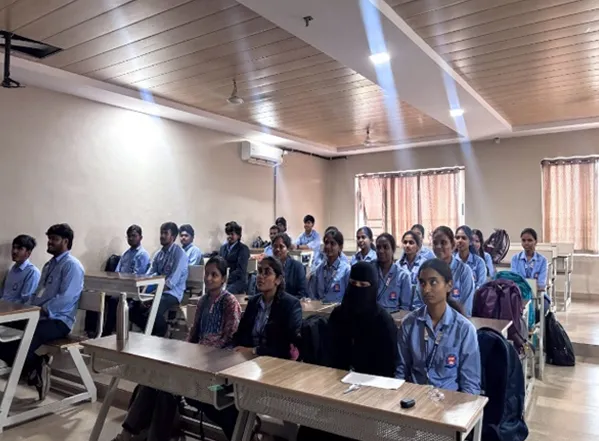
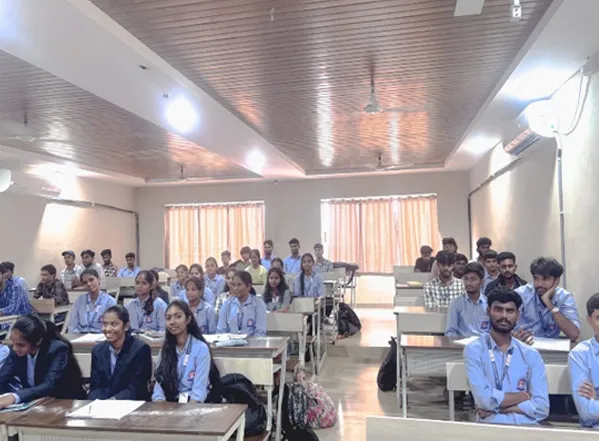
The Department of ECE features premium, climate-controlled classrooms meticulously designed to foster an immersive and sophisticated learning environment. Each facility is integrated with cutting-edge instructional technology, headlined by Interactive Panels, high-definition projection systems, and enterprise-grade connectivity to facilitate the seamless delivery of digital and multimedia content. By harmonizing ergonomic design with advanced pedagogical tools, these spaces cultivate a student-centered atmosphere that promotes high-level engagement and technical excellence.
Laboratory Facility
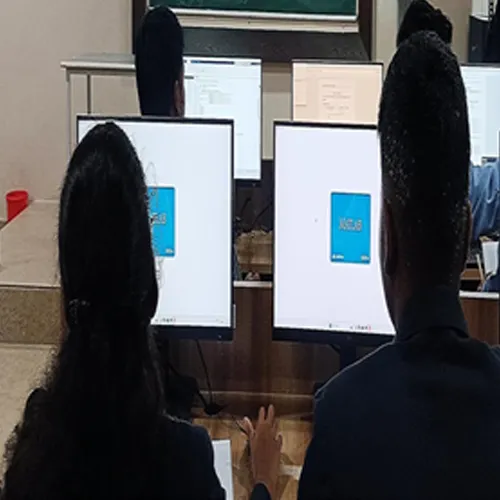
Signals and Systems Laboratory (SS Lab)
The SS Lab provides hands-on training for second-year ECE students in analyzing signals and systems using MATLAB/SCILAB. Students work with standard signals, study system properties, and apply convolution, correlation, and transform techniques. The lab effectively bridges theory with practice and prepares students for advanced subjects such as DSP, Communication Systems, and Control Systems.
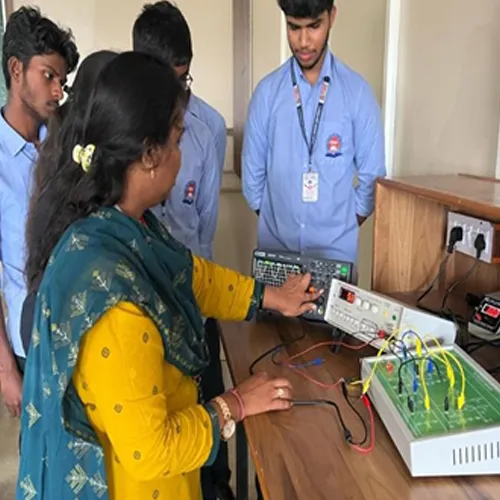
Integrated Electronics Laboratory (IE Lab)
The IE Lab provides hands-on training in the design and analysis of analog electronic circuits using BJTs and JFETs. Students perform experiments on amplifier characteristics, biasing, stability, feedback, and oscillator circuits, along with single-stage and multi-stage amplifier design. A mini-project integrates theory with practical implementation, preparing students for advanced courses such as Analog ICs, VLSI Design, and Communication Electronics.
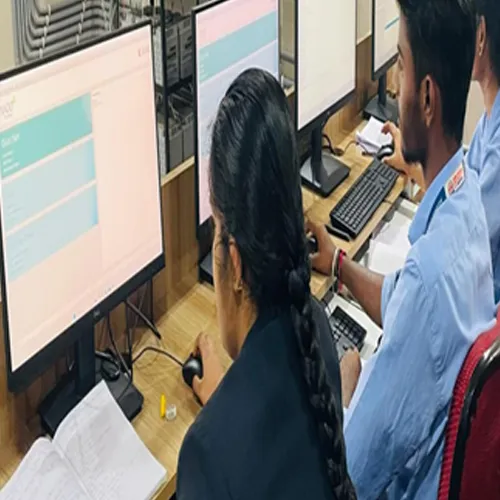
Digital System Design Laboratory (DSD Lab)
The DSD Lab offers hands-on training for second-year ECE students in the design and implementation of digital logic circuits using both hardware and VHDL. Students work on combinational and sequential circuits, binary code converters, and logic minimization, along with modeling and simulation of digital systems using VHDL. A mini-project enhances problem-solving and design skills, preparing students for advanced courses such as Computer Organization, Digital IC Design, and VLSI Systems.
Analog and Digital Communication Laboratory
This laboratory provides hands-on experience in analog and digital communication systems, covering modulation, demodulation, multiplexing, and pulse modulation techniques. Students work with AM, FM, digital modulation schemes, PCM, and baseband transmission using hardware kits and instruments. The lab strengthens practical understanding and prepares students for advanced courses in Digital Communication, Wireless Systems, and Signal Processing.
Linear and Digital IC Applications Laboratory
This laboratory provides hands-on training in the design and analysis of analog and digital circuits using operational amplifiers and standard ICs. Students implement amplifiers, filters, DACs, counters, shift registers, and memory circuits, gaining skills in circuit analysis and waveform interpretation. The lab strengthens practical understanding and prepares students for advanced courses in Digital Electronics, Embedded Systems, and VLSI Design.
Software Tools Used in ECE Laboratories
1. MATLAB – Signal generation, system analysis, transforms, communication simulations
2. SCILAB – Open-source alternative for signal and system analysis
3. ModelSim – VHDL simulation and verification for digital systems
4. Xilinx ISE / Vivado – VHDL synthesis, simulation, and FPGA-based digital design
5. Multisim – Analog and digital circuit simulation (IE Lab, IC Applications Lab)
6. LTspice – Simulation of analog circuits using BJTs, FETs, and Op-Amps
7. PSPICE – Circuit analysis and simulation for electronic and IC-based designs
8. Proteus – Mixed-mode simulation of analog, digital, and communication circuits
9. Logisim – Logic design and verification of digital circuits
10. GNU Octave – Numerical computation and signal processing (alternative to MATLAB)
List of Equipment Available
1. Desktop Computers / Workstations
2. Digital Storage Oscilloscopes (DSO) / CRO
3. Function / Signal Generators
4. Regulated Power Supplies
5. Analog and Digital Trainer Kits
6. Digital Logic / FPGA Trainer Kits
7. Op-Amp and Linear IC Trainer Kits
8. Communication System Trainer Kits
9. Breadboards and Prototyping Boards
10. Digital Multimeters
Admission Process
5.1 General Admission Policy
5.1.1. The minimum entry qualification for admission to programmes shall be as prescribed by the Board of Studies and approved by the Academic Council and Board of Management. Recommendations shall be placed before the Vice-Chancellor for final decision wherever required.
5.1.2. Degrees, diplomas, and certificates considered for eligibility must be awarded by UGC-recognized universities/institutions/boards or equivalent authorities.
5.1.3. Candidates must meet prescribed eligibility criteria related to educational qualifications, age, and other conditions. Provisional admission may be granted if a candidate is likely to meet criteria before the last date of admission. Failure to meet eligibility by the last date will result in cancellation of admission.
5.1.4. Admission may be denied if the candidate has been suspended, rusticated, expelled, or found with unsatisfactory conduct. Appeals shall be considered by the Appellate Committee constituted by the Vice-Chancellor.
5.1.5. Candidates already holding a degree/diploma/certificate in the same programme or discipline shall not be admitted again.
5.1.6. Students must submit undertakings at the time of admission declaring:
- No criminal background or ongoing FIR/case
- Non-possession of weapons on campus
- Commitment to prevent ragging (parental undertaking mandatory)
5.2 Admission of International Students (NRI / PIO / Foreign Nationals)
5.2.1. Admissions are governed by UGC, AIU, and statutory guidelines.
5.2.2. Guidance is provided by the International Students Facilitation Cell.
5.2.3. Admission is based on merit in qualifying examinations.
5.2.4. Eligibility requirements:
- Qualifications recognized by UGC/AIU
- Minimum age 17 years as on 31st December of the preceding year
- Equivalence certificate from AIU is mandatory
5.2.5. Admission priority:
- First: NRI/PIO with Telangana ancestry
- Second: NRI/PIO from other states with sponsorship
- Third: Resident Indians paying foreign currency fees
5.2.6. International students must comply with visa, security clearance, and documentation requirements.
5.3 Student Registration Number
5.3.1. Each student shall be allotted a unique 10-character alphanumeric Registration/Hall Ticket Number valid for the entire programme.
5.3.2. Format: Year – Institute – UG/PG/Doc – Branch/Department Code – Roll Number
5.4 Migration Policy
5.4.1. Migration is allowed from UGC-recognized universities/institutions with at least 70% curriculum equivalence certified by the Equivalence Committee.
5.4.2. Migration is subject to availability of seats and similarity of programme/discipline.
5.4.3. Migration fees, documentation, timelines, and approval procedures are governed by University regulations.
5.4.4. The Vice-Chancellor may permit migration on exceptional/compassionate grounds, subject to Academic Council ratification.
5.5 Intra-Programme (Branch) Transfers
5.5.1. Engineering students may request branch upgradation depending on seat availability and merit.
5.5.2. Applications will be invited, scrutinized, and merit lists prepared. Allocation will depend on merit and availability of seats.
5.5.3. Students remain in their parent branch until official notification of branch change is issued.
5.6 Equivalence Committee
5.6.1. Adjudicates equivalence of programmes/courses studied elsewhere for migration/admission purposes.
5.6.2. Committee Composition:
- Rector, GNU (Convener)
- Director/Dean of concerned Institute
- Chairperson of concerned Board of Studies
- Head of concerned Department
- Subject expert nominated by Vice-Chancellor (if required)
5.6.3. The Committee may suggest additional courses (maximum 3 subjects or 30% of total courses) to attain equivalence.
5.7 Programme Duration and Credit Requirements
5.7.1. Students must complete programmes within twice the minimum prescribed duration, failing which admission shall be forfeited.
5.7.2. Award of certificate/diploma/degree requires completion of prescribed credits with CGPA ≥ 5.0.
5.8 Semester System & CBCS
5.8.1. Academic year is divided into two semesters of 22 weeks each.
5.8.2. Continuous Internal Assessment (CIA) and Semester End Examination (SEE) are conducted as per UGC CBCS guidelines.
5.8.3. Students have the flexibility to choose core, elective, and skill-enhancement courses, supporting interdisciplinary learning and career readiness.
5.9 Course Registration
5.9.1. Students register online for courses each semester with approval from Class Advisor/Mentor.
5.9.2. Registration includes core and elective courses, with additional subjects limited to 4 credits, based on prerequisites and academic progress.
5.9.3. Course registration is final, except for alternate arrangements due to unforeseen circumstances.
5.9.4. Dropping courses requires prior approval within 15 days of semester commencement.
5.10 Attendance Requirements
5.10.1. Minimum 75% attendance required to appear for Semester End Examinations.
5.10.2. Attendance may be adjusted for mid-term exams as per University policy.
5.10.3. Condonation of shortage and readmission due to attendance is as per Examination Regulations.
5.11 Grading System
5.11.1. A 10-point grading system is followed as per UGC guidelines, awarding grades based on CIA + SEE performance.
5.11.2. SGPA and CGPA are calculated to determine overall academic performance.
Career Opportunities
6.1 Student Mentoring and Counselling
Guru Nanak University (GNU) places strong emphasis on student mentoring and career counselling. Each student is assigned a mentor who provides guidance to support academic growth, career aspirations, and personal development. Mentors help students:
- Identify and achieve career goals
- Recognize and address gaps in knowledge or generic skills
- Gain confidence and empowerment in personal development
Mentors maintain a personalized approach, understanding each student’s academic, research, professional, and personal goals. Coordinators and counsellors also evaluate students individually for:
- Low internal exam performance
- Continuous absenteeism
- Difficulty understanding subjects
- Assistance for backlog courses
- Students transitioning from regional medium education
Mentoring helps students feel connected and engaged on campus, promoting overall success and participation in extracurricular and industry-related events.
6.2 Campus Resources and Facilities
GNU provides state-of-the-art facilities to support academic, research, and personal growth:
Classrooms and Tutorial Rooms:
- IT-enabled classrooms with seating for up to 100 students
- Tutorial rooms for 20–40 students
- Equipped with LCD projectors, power supply, and ergonomic furniture
Laboratories and Innovation Centers:
- Equipped with modern tools and equipment for hands-on learning
- Faculty with industry experience provide practical training
- Supports research-based experiments and project development
Knowledge Resource Centre (Central Library):
- Area: 2,000 sqm with seating for 700 students
- Working hours: 8:00 AM – 8:00 PM
- Access to digital libraries and e-journals (IEEE, DELNET, BENTHAM, J-GATE, ASME, ASCE)
- Collection of Indian print journals, general reading, competitive exam books
- MOOC access: NPTEL, Coursera, SP
- Services: Photocopy, printing, book bank for needy students, plagiarism checking
Other Campus Facilities:
- High-speed internet and digital library
- Transport facility for students
- Open access for faculty and students
6.3 Career Development and Placement Support
GNU builds on a rich legacy of campus placements, focusing on preparing students for industry and entrepreneurship opportunities.
Objectives:
- Facilitate placements for final-year students in reputed organizations
- Provide industrial training and practical exposure throughout academic programs
- Organize seminars, lectures, group discussions, mock interviews, and workshops on career guidance, entrepreneurship, and personality development
- Offer guidance for self-employment opportunities and international job prospects
Training and Placement Activities:
- Conducted over 13 technical lectures and industry sessions by experts from HCL, IBI Group, ServiceNow, Deloitte, LTI Mindtree, Hexaware, and others
- Organized mock interviews for 1,500+ students
- MoUs signed with 15+ companies/organizations for internships, industrial training, and recruitment
Career Outcomes:
GNU graduates are equipped with technical knowledge, professional skills, and industry readiness, enabling successful placements across IT, manufacturing, analytics, banking, and research sectors, both in India and abroad.
Departmental Events
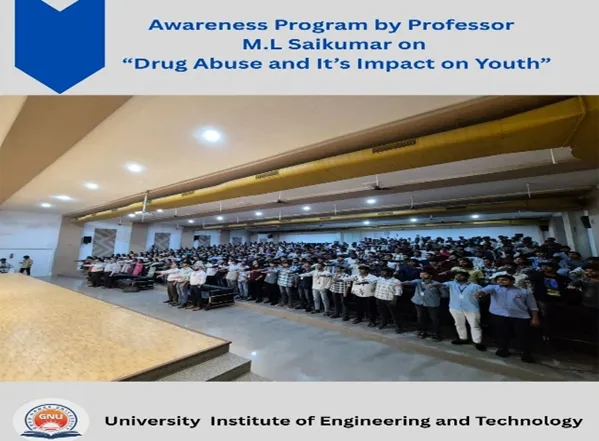
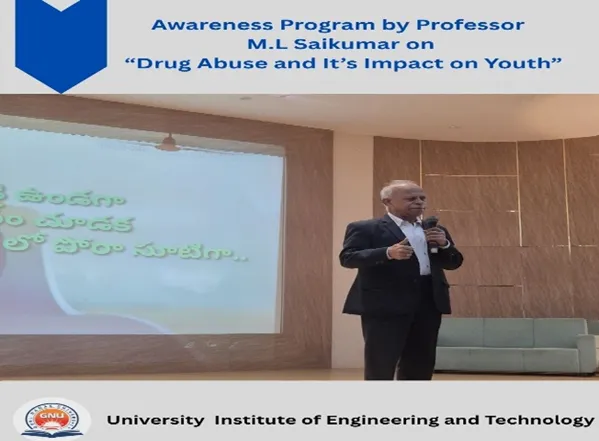
Awareness Program on “Drug Abuse and Its Impact on Youth”
The University Institute of Engineering and Technology (UIET) conducted an awareness session on “Drug Abuse and Its Impact on Youth”, led by Professor M. L. Saikumar. The program aimed to educate students about the harmful effects of drug abuse and promote a healthy and responsible lifestyle among young individuals. Professor Saikumar emphasized the vital role of youth in creating a drug-free society and encouraged students to become active advocates for awareness and positive social change.
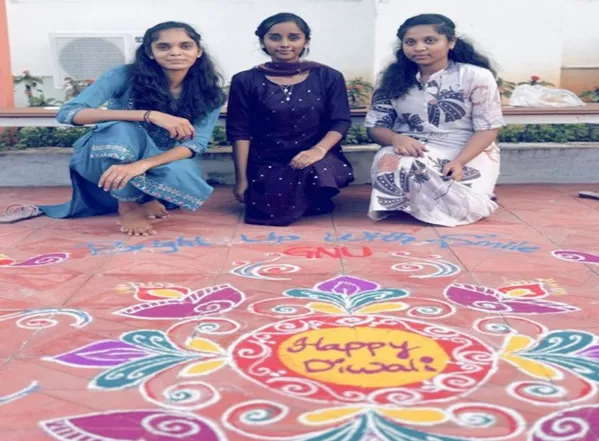
Diwali Celebrations
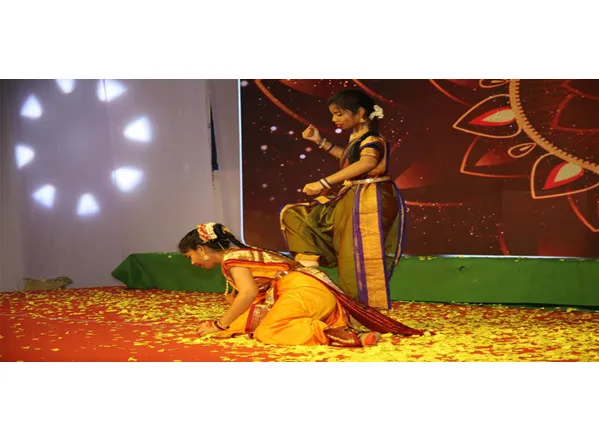
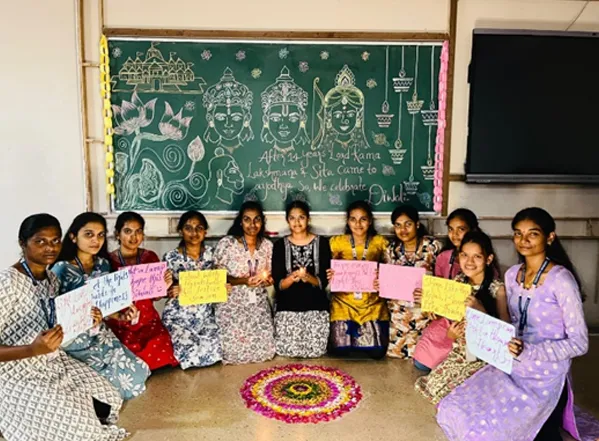
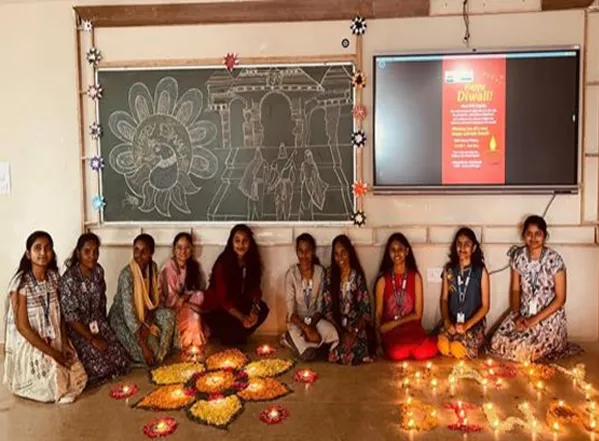
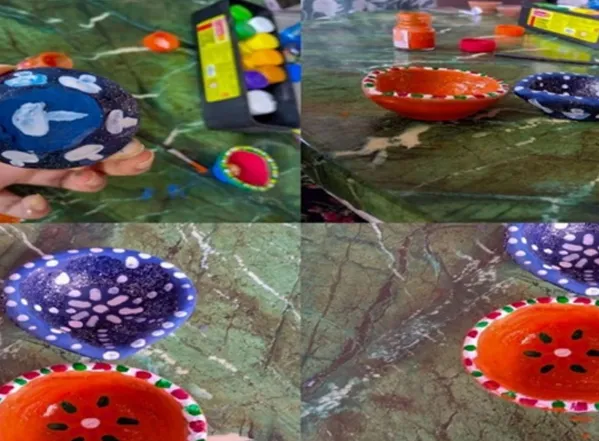
The University Institute of Engineering and Technology (UIET) celebrated the festival of lights, Diwali, with great enthusiasm and joy. The campus was beautifully decorated with diyas, rangoli, and lights, creating a festive and vibrant atmosphere. Students, faculty, and staff came together to celebrate the spirit of unity, happiness, and cultural tradition. Cultural performances, music, and traditional sweets added to the festive cheer, while various competitions and activities engaged students across all departments. The event fostered a sense of community and strengthened the bond among everyone on campus, making the celebration truly memorable.

Engineers Day
The Department of Electronics and Communication Engineering celebrated Engineers’ Day with great enthusiasm, honoring the remarkable contributions of Sir M. Visvesvaraya. The event aimed to inspire innovation, creativity, and technical excellence among ECE students. A range of engaging technical activities were organized, including circuit debugging, technical quizzes, poster presentations, and problem-solving challenges, providing students with opportunities to demonstrate analytical skills, teamwork, and subject knowledge. The celebration created a vibrant learning environment, motivating students to think innovatively and reinforcing the values of continuous learning, professional growth, and excellence in the field of engineering.
Ganesh Chaturthi Celebrations
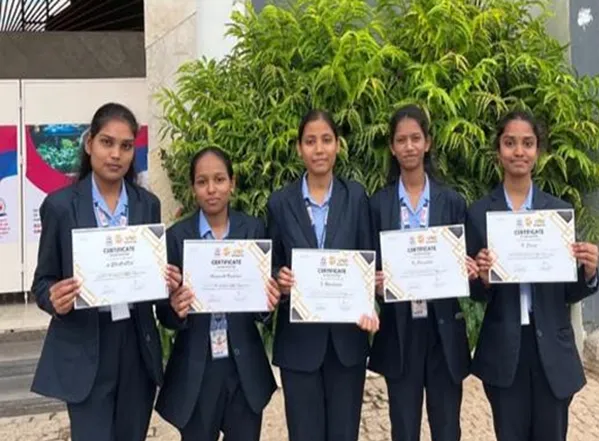
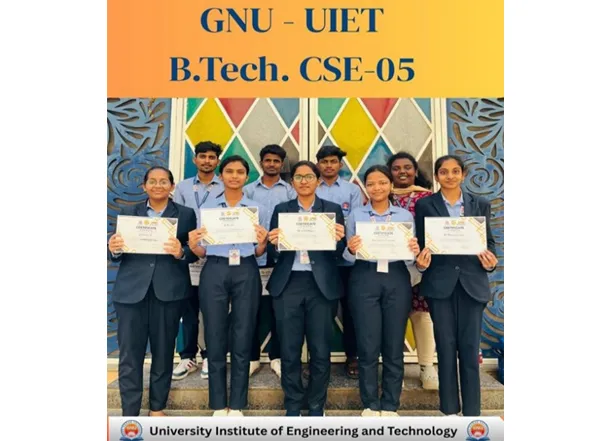
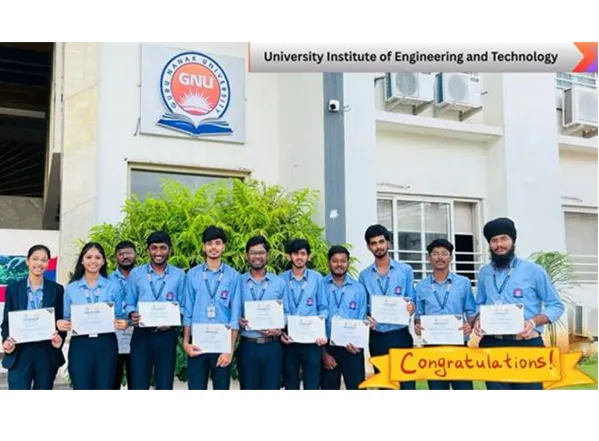
The University Institute of Engineering and Technology (UIET) celebrated Ganesh Chaturthi with devotion and enthusiasm. The event commenced with the installation of Lord Ganesha’s idol, followed by traditional rituals and prayers conducted in a serene and spiritual environment. Students, faculty, and staff came together to seek blessings for wisdom, prosperity, and success.The celebration also featured cultural performances, devotional songs, and community participation, fostering a sense of unity and reinforcing the rich cultural traditions of the university. The event provided an opportunity for students to engage in spiritual reflection while celebrating the festival with joy and harmony.

Bathukamma Celebration
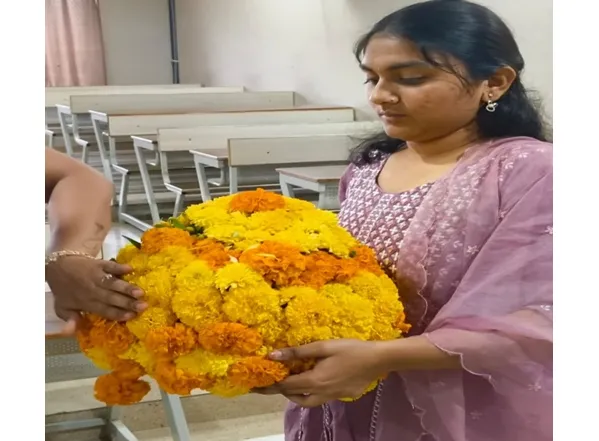
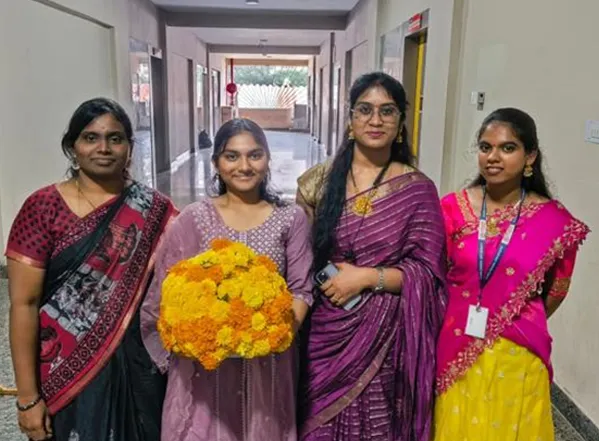
The Department of Electronics and Communication Engineering (ECE) joyfully celebrated Bathukamma, the vibrant floral festival of Telangana, with great enthusiasm and cultural spirit. Students and faculty came together to create beautifully arranged flower stacks, symbolizing prosperity, harmony, and community.
The event highlighted the rich cultural traditions of Telangana through music, dance, and colorful floral displays. It provided a platform for students to engage in teamwork, creativity, and cultural appreciation, fostering a sense of unity and pride in regional heritage.
IGNUS_2k25
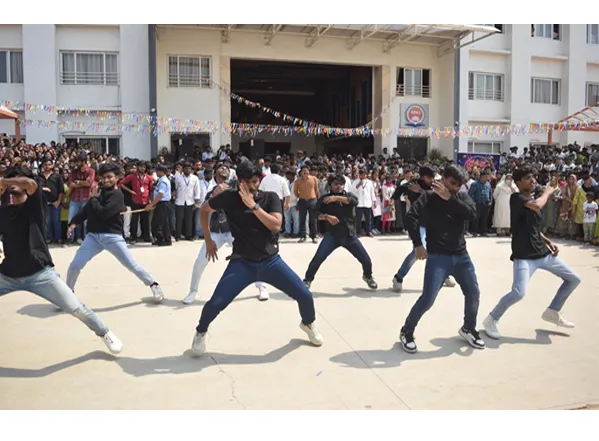
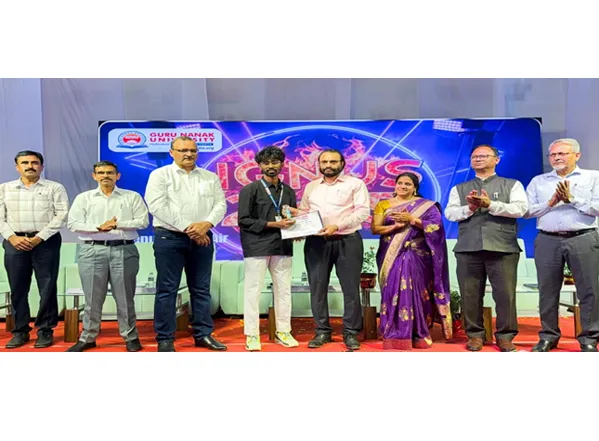
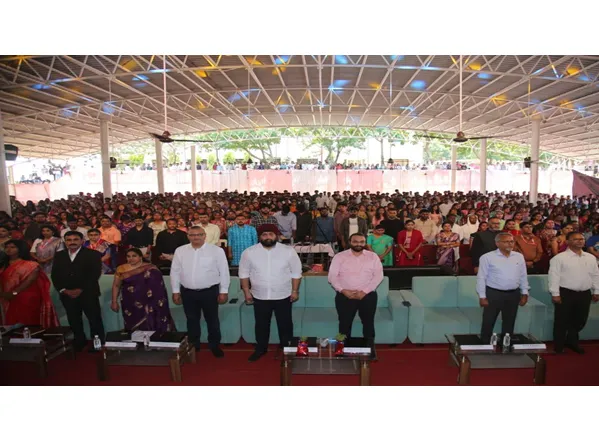
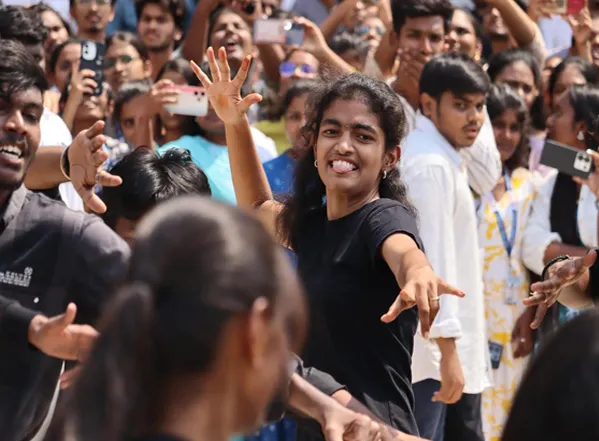
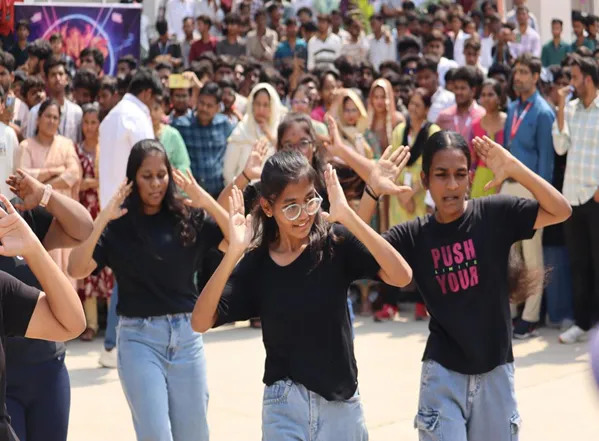
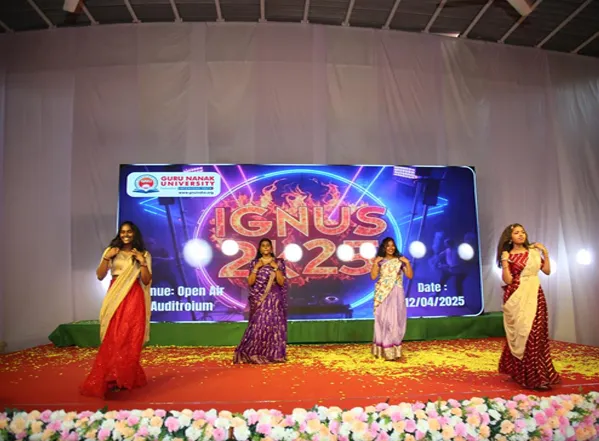
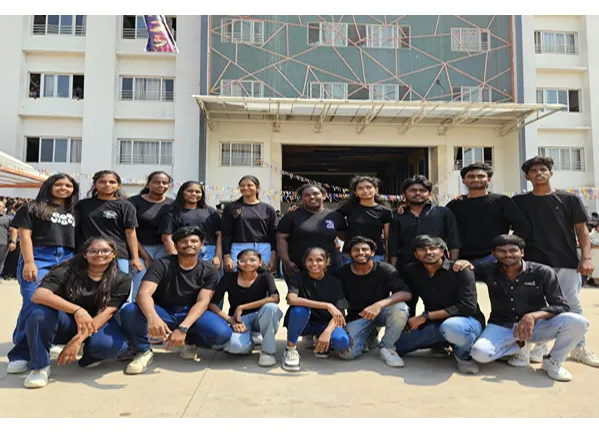
The University Institute of Engineering and Technology (UIET) celebrated its Annual Day – IGNUS 2K25 with great enthusiasm and festive spirit. The event served as a grand platform to recognize and appreciate the achievements of students and faculty in academics, research, and co-curricular activities.
The celebration featured a variety of cultural performances, technical exhibitions, and award presentations that highlighted the diverse talents of UIET students.
The vibrant performances, creative displays, and energetic participation made the event truly memorable.
The Annual Day reflected the institute’s commitment to fostering academic excellence, innovation, and holistic development, bringing together the entire UIET community in a spirit of joy and celebration.

Khel Mahotsav
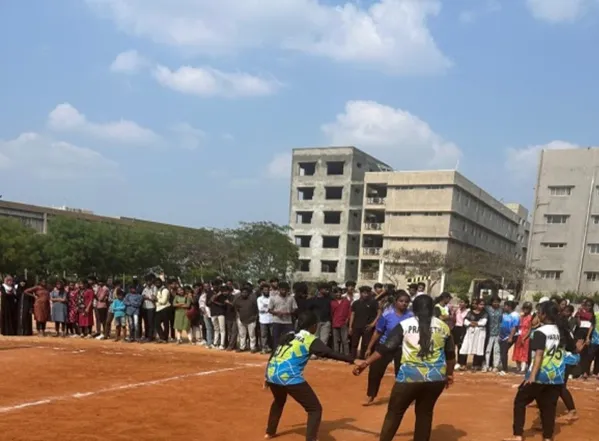
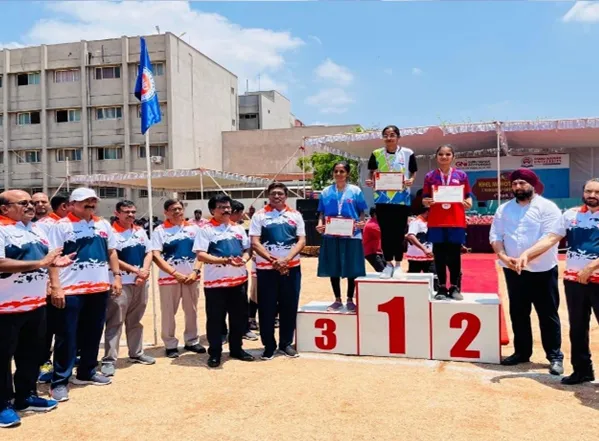
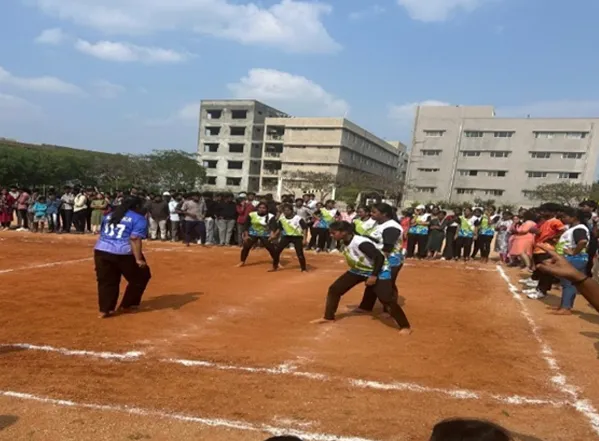
Khel Mahotsav at UIET is a vibrant annual sports festival that promotes teamwork, discipline, and sportsmanship among students. The event brings together participants from various departments to compete in a wide range of indoor and outdoor sports, fostering physical fitness, enthusiasm, and campus unity. Students demonstrate talent and determination in events such as cricket, volleyball, badminton, athletics, kabaddi, football, and chess, among others. Beyond athletic excellence, the festival nurtures leadership qualities, collaboration, and a healthy competitive spirit. With enthusiastic participation and spirited support from across the institute, Khel Mahotsav reflects UIET’s strong commitment to holistic student development, effectively balancing academics with sports, recreation, and fellowship.